Aristotle’s three ways to persuade
Aristotle wrote the first marketing framework, and it still works
More than two thousand years ago a Greek teacher listed the three ways to persuade a crowd. Every good ad, pitch and landing page still uses all three.
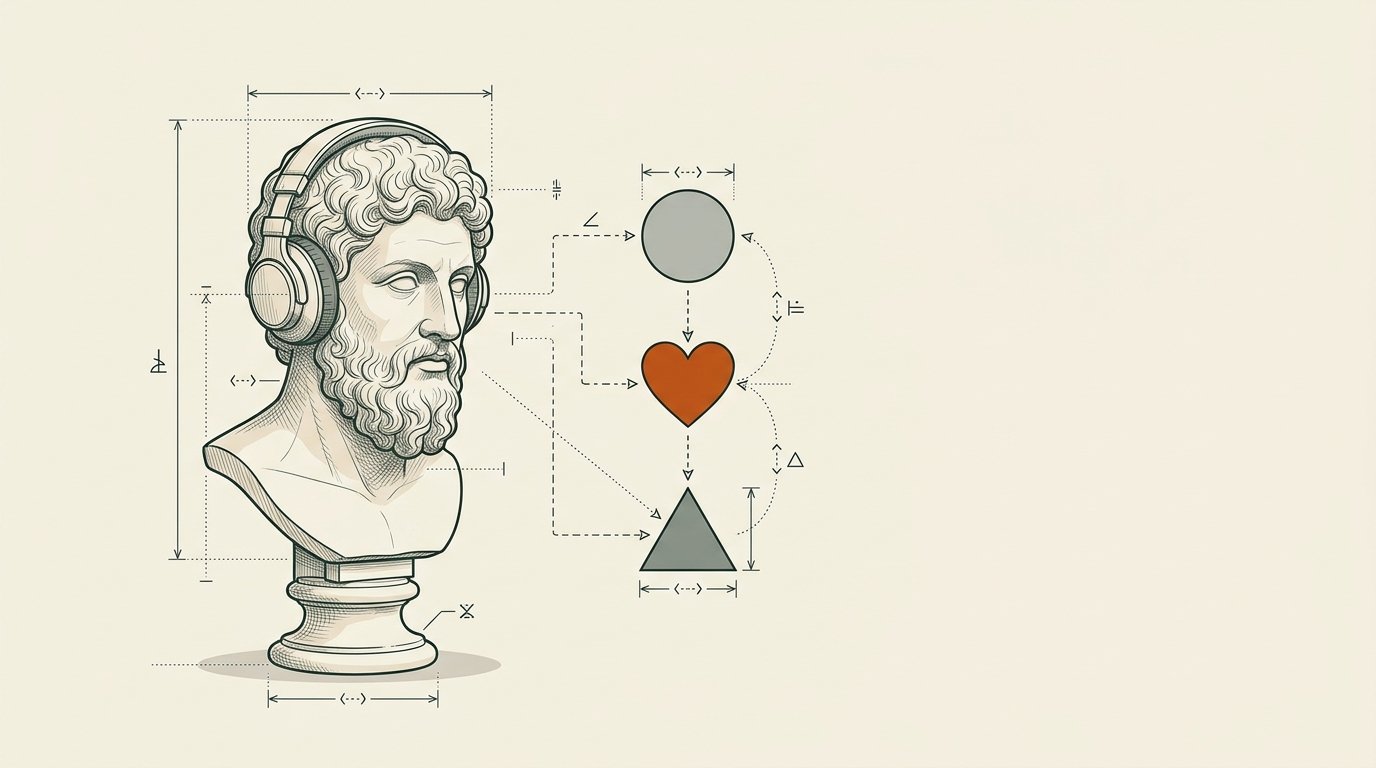
Around 2,300 years ago, in Athens, Aristotle wrote a book about persuasion. He called it Rhetoric. It was meant for men who had to argue in court or in the assembly, where there were no lawyers and you spoke for yourself.
In it, he said there are only three ways to persuade a person. He gave them Greek names. Ethos, pathos, logos.
Ethos is character. Does the listener trust the speaker? Pathos is feeling. Does the message move the listener? Logos is reason. Does the argument make sense?
Now look at any marketing that works.
A customer review is ethos. A photo of a happy family in a new home is pathos. A price comparison table is logos.
Every marketing framework invented since is a version of this. The ones that fail usually lean on one leg and forget the other two.
I see it every week. A tech company sends me a brief that is all logos. Features, specs, speeds, percentages. Correct, and nobody cares. A consumer brand sends a brief that is all pathos. Sunsets, music, a slogan about living your best life. Lovely, and nobody knows what they sell.
The best campaigns I have worked on had all three, in order. First ethos, so the reader believes you. Then pathos, so they want it. Then logos, so they can justify the purchase to themselves and their partner.
Aristotle added one thing that marketers still forget. He said ethos is built inside the speech itself, by how you speak, not only by your reputation before you start. In other words, a stranger can earn trust in thirty seconds by being clear, specific and honest about limits. A brand nobody has heard of can win the room by saying what it does and what it does not do, plainly.
Here is a simple exercise. Take your home page. Mark each sentence with E, P or L. Count them. Most pages I see are nine L, one P, zero E. Then they wonder why nobody calls.
The man was writing for the law courts of Athens. He could have been writing for your LinkedIn page.