The lost art of copywriting
The lost art of copywriting, and why it is coming back
The old copywriters sold with facts and a plain voice. Then marketing got clever. Now, with AI writing most of the words, the old craft is the thing that stands out.
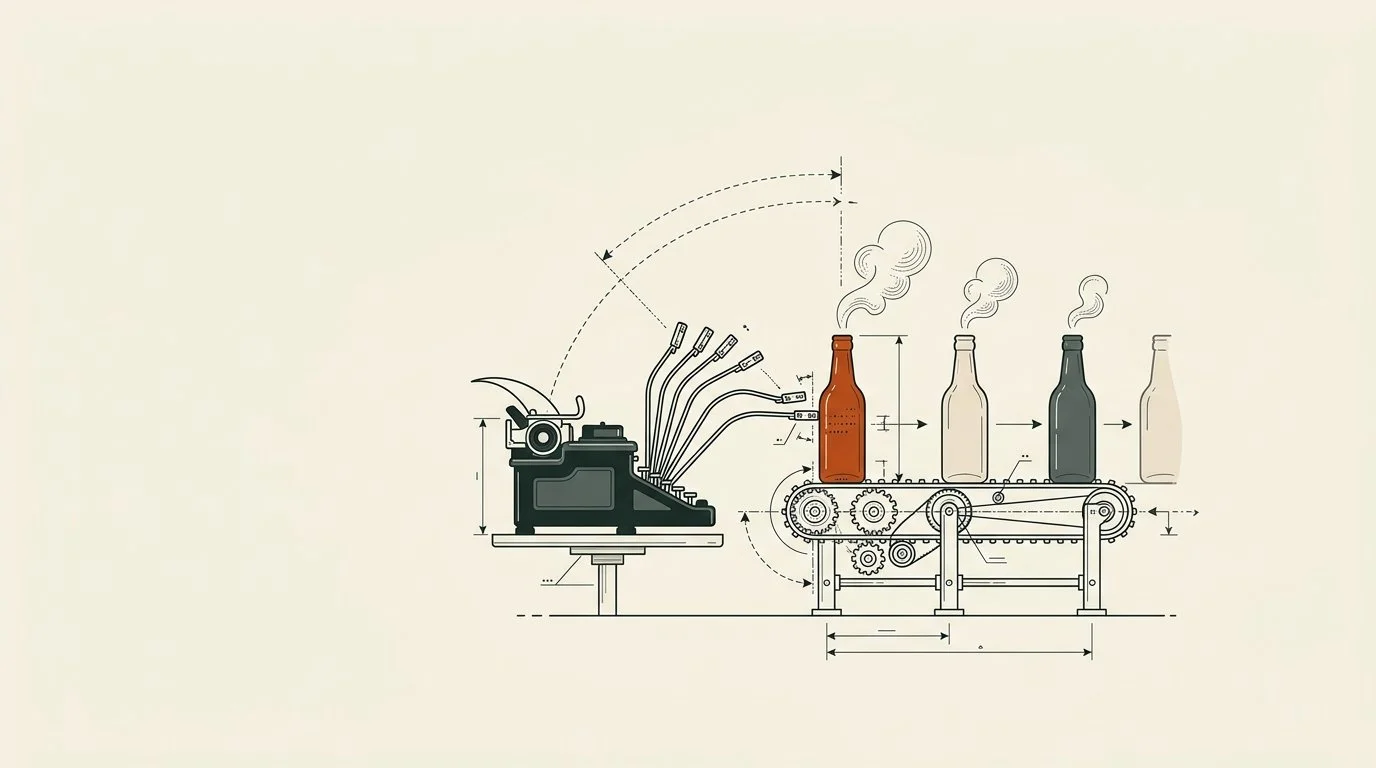
In the 1920s a copywriter named Claude Hopkins visited a brewery called Schlitz. Every beer company at the time was shouting "pure". Hopkins asked to see how the beer was made. He saw the bottles being cleaned with steam, the water filtered, the yeast chosen with care.
He asked why nobody told customers this. The brewers said every brewery does this. Hopkins said yes, but nobody has said it. He wrote the ads around the process. Schlitz rose from the back of the pack to the top of the market.
That is the lost art, in one story. Find the true, specific thing. Say it plainly. Say it first.
David Ogilvy did the same thing thirty years later for Rolls-Royce. He read the engineers' notes for three weeks. He found one line saying the car was so quiet that the loudest sound at speed was the clock. He put that fact in the headline. The ad is still taught today.
Then marketing got clever. Headlines became puns. Brands became "purpose-led". Websites filled up with words like "empower", "seamless" and "journey". If you remove the logo from most company home pages today, you cannot tell which company it is.
AI has made this worse and, strangely, will make it better.
Worse, because anyone can now produce a thousand smooth, generic words in a minute. The internet is filling up with writing that sounds fine and says nothing.
Better, because in a sea of smooth writing, a plain specific sentence stops the reader. "Our plumbers arrive within two hours or the call-out is free." That is a Hopkins sentence. No AI would write it unless you gave it the fact.
So the job of the copywriter in 2026 is the job Hopkins had. Go to the brewery. Ask questions. Find the thing the business does that it thinks is normal and the customer thinks is remarkable. Then write it down in the words a customer would use at a dinner table.
Here is my test for a headline. Read it aloud to someone outside your industry. If they ask "so what do you actually do", rewrite it.
The tools changed. The craft is the same one it was a hundred years ago. Facts, plainly told, by someone who went and looked.