AI runs on electricity
The AI boom runs on electricity, and your power bill has noticed
The International Energy Agency says data centre electricity use grew far faster than everything else last year. Here is why that matters for prices and for the next decade of energy.
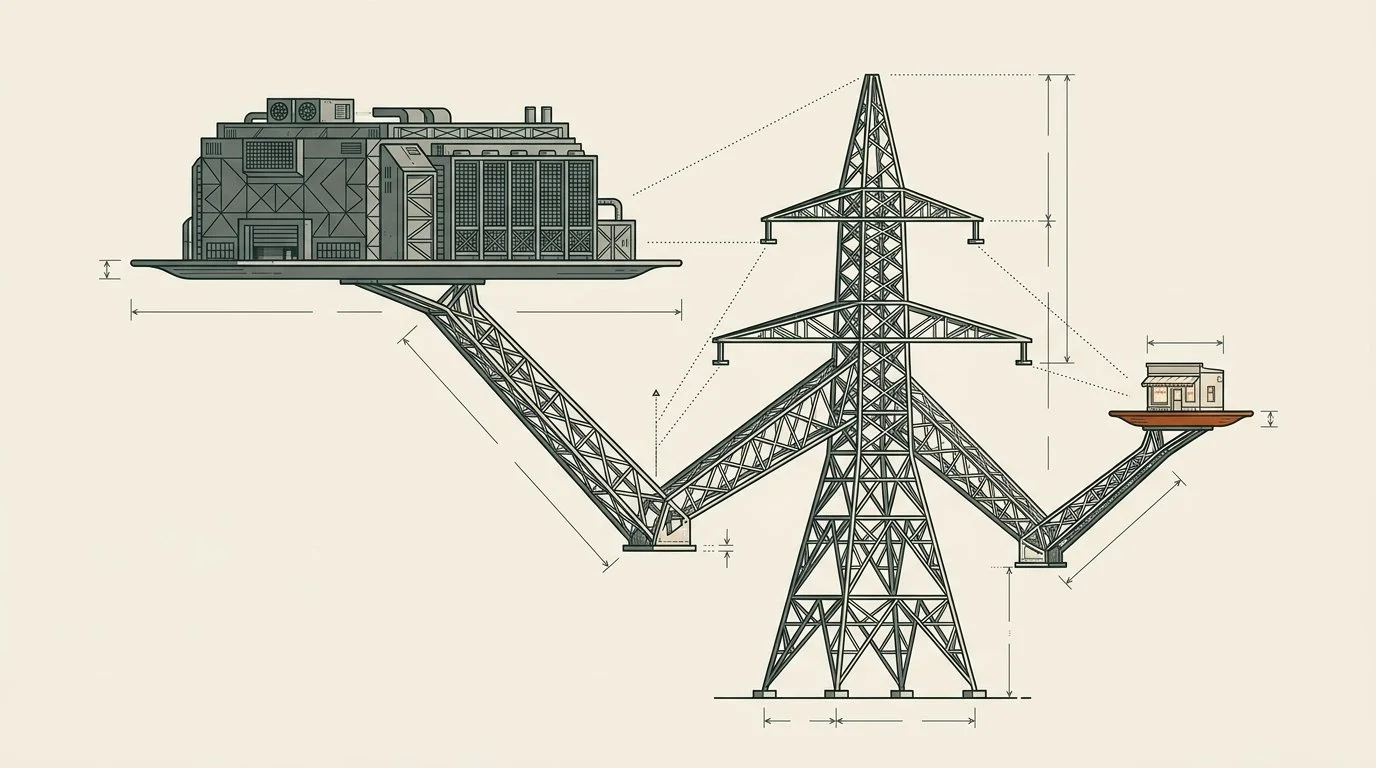
Last month the International Energy Agency, the body that advises governments on energy, published a report with a plain message. Data centres used about 17 percent more electricity in 2025 than the year before. The rest of the world's demand grew by about 3 percent.
So one small part of the economy is growing its appetite for power more than five times faster than everything else. The IEA expects data centre demand to double by 2030.
Here is why that reaches your bill.
Electricity is a strange product. It has to be made at the moment it is used. You cannot stockpile it the way you stockpile grain. So when a large new user plugs in, the grid needs new generation and new wires, now. Building a power station takes years. Building a transmission line takes longer, mostly because of planning and land.
In the meantime the gap is filled by paying more for the power that exists. That shows up first in wholesale prices, then in the price a retailer charges you.
There is a second effect. The big technology companies now sign long contracts for power directly with generators. They want certainty. A wind farm or gas plant that sells most of its output to one data centre has less to sell to the rest of us.
Now the hopeful part, because there is one.
The same report notes that these companies are funding things the rest of the grid struggles to pay for. New nuclear designs. Geothermal. Large batteries. Data centres that can turn themselves down when the grid is stressed. A customer that wants a lot of power for decades, on a long contract, is exactly the customer a new power project needs before it can be built.
So the boom raises prices in the short run and may pay for the fix in the long run. The question is who sits in between.
What does a small business do with this? Two things.
Read your energy contract. Many businesses sit on default rates. A fixed-term deal signed now is a bet that prices rise, and I think it is a reasonable bet.
Think about rooftop solar and a battery as a business decision instead of a green one. For a shop with daytime load, the maths has rarely looked better.
The sheds I wrote about in February are now plugged in. We are all sharing the same grid with them.
Source: International Energy Agency, Key Questions on Energy and AI, April 2026.