El Niño and your groceries
A warm patch of ocean is about to change the price of your groceries
The Bureau of Meteorology has declared an El Niño. Here is what that is, in plain words, and why it reaches from the Pacific to a Melbourne supermarket shelf.
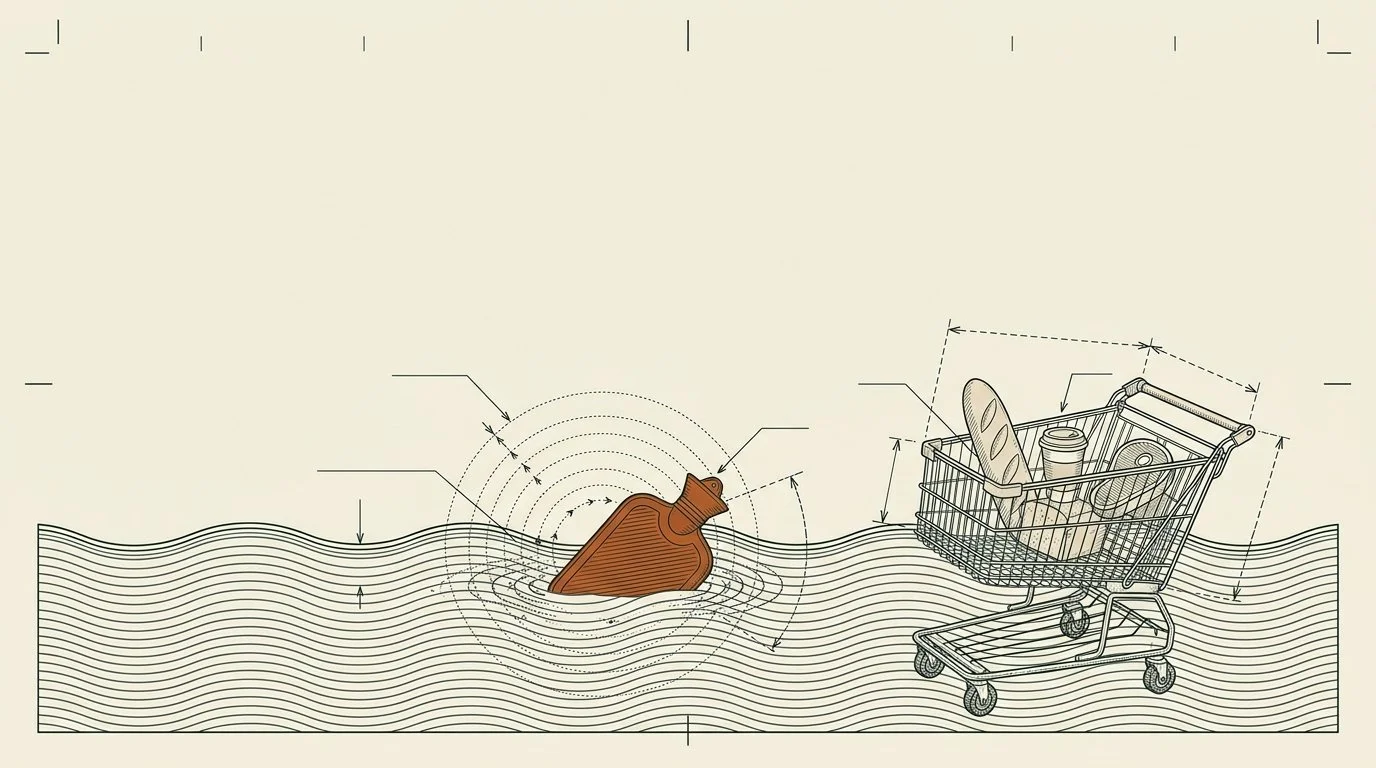
On 16 June the Bureau of Meteorology declared that El Niño is underway. If you grew up in Australia you have heard the name. If you grew up somewhere else, like I did, it can sound like a mystery. Here is the plain version.
The Pacific Ocean is enormous. Normally, trade winds blow from east to west across it, pushing warm surface water towards Asia and Australia. That warm water feeds the clouds that bring us rain.
Every few years the winds weaken. The warm water slides back east, towards South America. The rain goes with it. That is El Niño. For Australia it usually means a drier, hotter year, especially in the east. For Peru and parts of the Americas it means floods.
The Bureau measures it with a single number, the temperature of a patch of the central Pacific compared to normal. By late August that number was well above the level needed to declare an event, and the Bureau's forecasts had it climbing further into spring. This one is shaping up to be strong.
Now, the economics. This is where it gets interesting.
A dry year in eastern Australia means less wheat, less barley, thinner cattle and higher feed costs. Farmers sell stock early because they cannot feed it. Beef gets cheaper for a few months, then dearer for years as herds rebuild.
El Niño also brings drought to parts of Indonesia and India, and strange weather to Brazil and Vietnam. Those four places grow a large share of the world's palm oil, sugar, coffee and rice. When their harvests shrink, prices rise everywhere, including on the shelf at your local supermarket.
So the warm patch of water reaches your trolley through three doors. The price of a loaf. The price of a steak. The price of a coffee.
There is a business angle here for anyone in food, hospitality or retail. Your supplier contracts are about to matter more than your marketing. Lock in what you can. Watch the Bureau's updates the way you watch interest rates.
And a marketing angle too. When prices move, customers want to know why. A cafe that explains "coffee went up because of a dry year in Vietnam, here is what we are doing" keeps its customers. A cafe that just changes the board loses them.
The ocean does not care about any of this. But your margins will.
Source: Bureau of Meteorology ENSO outlook, June and September 2026.