What an AI agent is
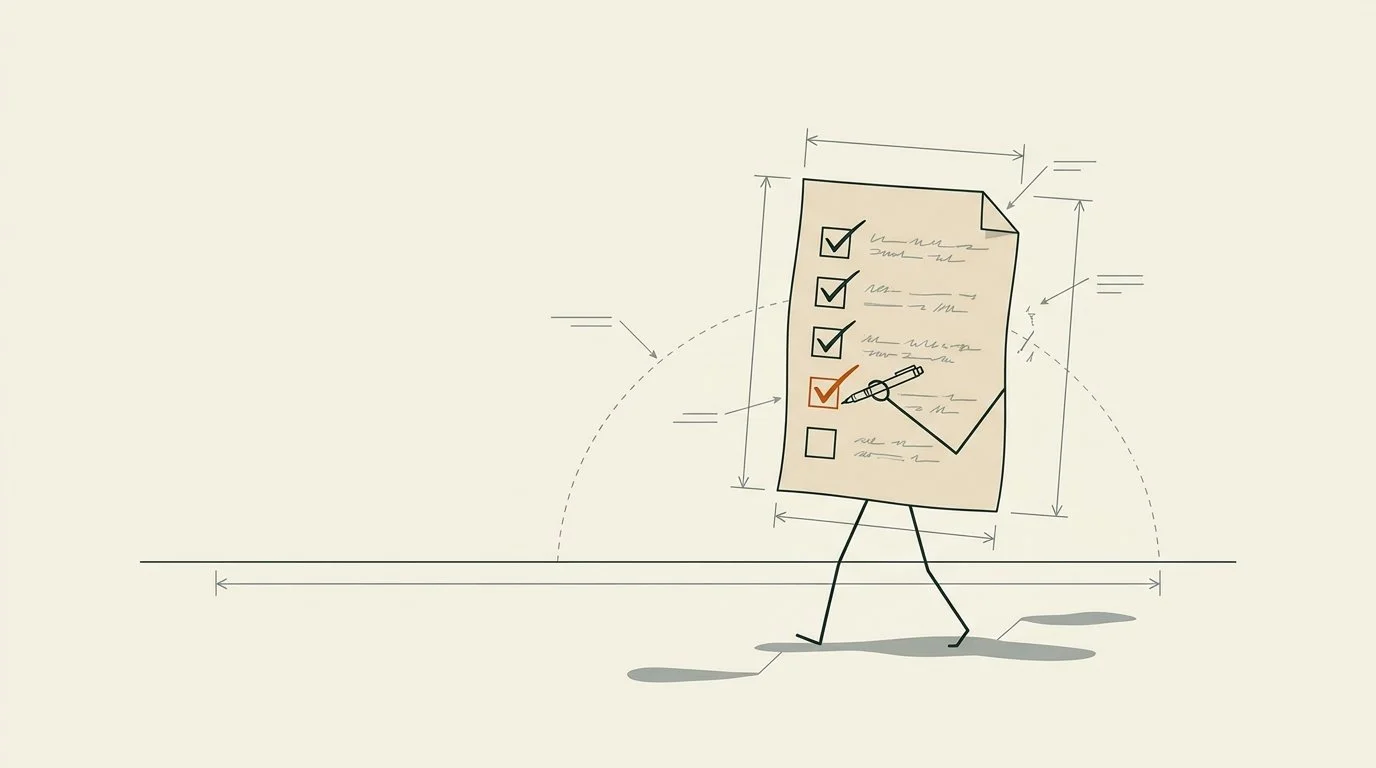
An agent is a to-do list that does itself
Everyone says "agentic AI" and most people nod along. Here is the plain version, with one example from my own week.
Every second LinkedIn post this year has the word "agent" in it. Here is what it means, in plain language.
A normal AI chat answers a question. You ask, it replies, it stops.
An agent is given a goal and a set of tools. It works out the steps. It does step one, looks at the result, decides on step two, and keeps going until the goal is done or it gets stuck. Then it comes back to you.
So a chat is a conversation. An agent is a to-do list that does itself.
Here is a real example from my week.
A client sends me a podcast recording every fortnight. The old process had six steps. Upload the file. Get a transcript. Pull out the best three quotes. Write a short description. Draft four social posts. Save everything into the right folder with the right names.
I used to do those steps myself, one at a time, with a different tool for each. Forty minutes, on a good day.
Now I give an agent the file and one sentence. "Prepare episode 14 for publishing, the usual way." It has access to the transcription tool, my folder, and my style notes. It does the six steps. It writes me a short report of what it did. I check the quotes, fix one word, and publish.
Three things make this work, and all three are boring.
The agent has a written process to follow. I wrote that process once, in plain English, and saved it.
The agent has tools it is allowed to use, and only those tools. It can read and write in one folder. It cannot send emails.
The agent reports back before anything goes public. I am still the last step.
That last point matters. An agent that can act on its own is useful and also risky. Give it a small, clear job. Watch the first ten runs closely. Widen its tools only after it has earned it. Same rule you would use with a new assistant.
Where does this go next? I think most small businesses will have two or three of these running quietly within a couple of years. One for bookkeeping chores. One for customer follow-up. One for content. Each doing the repeated, boring work that nobody enjoys.
The owners who win will be the ones who wrote down their processes. If your way of doing things lives only in your head, the agent has nothing to follow. Start writing.